Thought Flow

Tag: art

  • The value of games

    "Who wants to play video games?"
    "Who wants to play video games?" by JD Hancock (CC-BY)

    It seems that video games have slowly been devaluating as an entertainment medium over the last couple of years. Before the App Store and Steam arrived, there was only two ways to play games: Buy a full-price physical copy or find a pirated version. With the advent of app stores, the highest grossing mobile games are now so-called "free"-to-play games and at least four times a year, there is yet another Steam sale with 80% discounts on tons of games for the more traditional PC, Mac (and Linux!) gamers.

    When everything is free or extremely cheap all the time, it is understandable that a lot of gamers get used to free and cheap being the status quo. Combined with a somewhat unwritten rule that games have to keep us entertained for many hours to avoid being branded as "short", it must be tough being a traditional game developer these days.

    I do not know exactly where I am going with this, but I just have this kind of sad feeling when thinking about how some people value games. For me, video games is the epitome of art, as it often combines exciting story-telling with beautiful visual aesthetics and amazing soundscapes. So when I see people complaining about a paid expansion or give bad Steam reviews because they finished a $10 game in two hours (I hope those same people complain about ticket prices at the movie theater), I hope it is just a vocal minority that feel this way.

    If I ever created a video game (which is on my Life TODO List ™), I hope people would give it bad reviews if it was a bad game — not because it was not free or kept them entertained for 50 hours.
  • Share your art

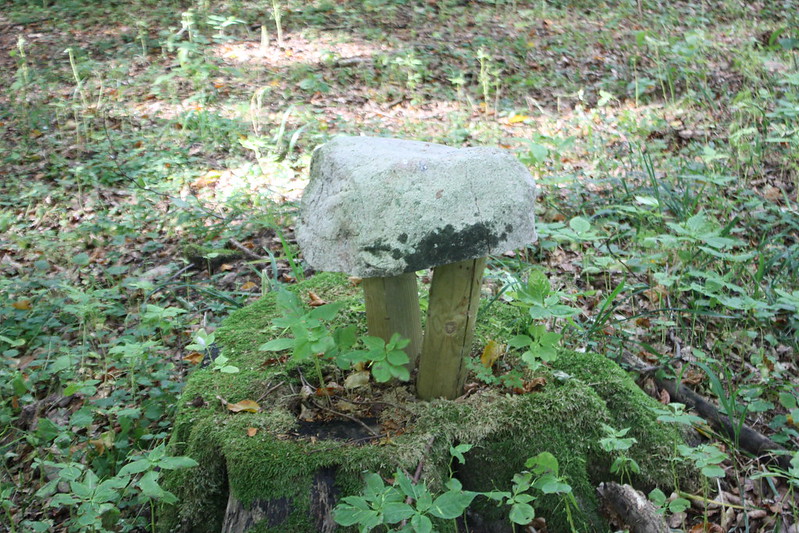
    Frisbjär stone... art?

    A few days ago, I talked to a guy that plays the piano. He uses YouTube tutorials to learn new songs and told me that he would like to record himself playing the piano. I asked him if he would put the recordings online somewhere, and his reply was one I have heard often before:

    “Yes, if they are good.”

    I believe in releasing as much art as possible, even if the artist does not think that their art is “good”. I have often heard people claim that there is “too much bad art” out there so it is difficult to find the “good” stuff. I strongly disagree with this point of view.

    Consider this: A toddler draws their first doodle and proclaims: “Look, it’s mommy and daddy!”. This example illustrates my two main points for this post:

    1. “Good” is highly subjective. To most people, the toddler drawing will probably look like randomly connected lines. To the parents, the drawing marks an important moment in the child’s development.
    2. “Good” is often a result of unnecessary self-imposed criticism. The toddler does not have this. They really do think that their drawing looks like mommy and daddy.

    While the first point is commonly stated as “people have different tastes”, we do not talk enough about the second point although it is highly endemic in our society.

    As we age, self-criticism often increases. This is not inherently a bad thing. After all, it is important to improve our skills and a healthy amount of self-criticism and feedback might help with that. However, it becomes a problem when we start giving up completely. I think there are several reasons why this happens and it is often a social issue. For example, we institutionalize criticism at an early age in our schools, we glorify high-performing individuals to the point that if you cannot perform at the same level, then it is not worth doing it at all in the first place. And finally, there are always a horde of “critics” that will gladly tell you if they do not like something.

    When it comes to art, the focus is often on the end result, not the journey and the story behind the art. I am not saying that we should release everything we create, but too much self-imposed criticism is not doing any good for anyone, especially not ourselves. For example, creating a full piano cover of a song is a major achievement, and although it might not get a million likes on YouTube, it is still worth sharing, even if just one other person listens to it.

    This is a wonderful time to share art, especially digital art. Having a blog is great for writing, SoundCloud is great for sharing music, Flickr is an excellent photo-sharing app, etc. So get your stuff out there. If you enjoyed creating it, other people might enjoy it too.

  • Copying is not stealing, period

    A copy is just a copy
    A copy is just a copy by kioan

    Taylor Swift recently received a lot of media attention for pulling her music off Spotify. I am not going to comment specifically on Swift’s decision for pulling the music but I would like to take a look at the following quote from Swift in an interview with Yahoo:

    I felt like I was saying to my fans, ‘If you create music someday, if you create a painting someday, someone can just walk into a museum, take it off the wall, rip off a corner off it, and it’s theirs now and they don’t have to pay for it.’ Taylor Swift

    Comparing physical art with digital art in this way is like comparing apples and skyscrapers. Does Swift really think that vandalizing and stealing part of a painting is the same as streaming a song? I hope not. The painting is a physical object and it is unique. The bits and bytes of a song are not unique. If I rip off the corner of your painting, it is not the same painting anymore. If I stream your song on Spotify, the song is still the same. If your painting is stolen, you do not have it anymore. If I copy your song, we both have the same song.

    A digital copy is a perfect copy — identical to the original. Analogies like Swift’s convey the wrong message about streaming and it sounds very similar to the old music industry slogan that “copying is stealing”. But let’s be perfectly clear about something: Copying is not stealing.

    Copying, pirating, streaming or whatever might or might not be a bad thing but we can and should not use physical analogies to describe the act of copying or streaming. It is very disappointing that Taylor Swift is perpetuating the traditional discourse of the industry when talking about digital art.