Thought Flow

Technology and other things

Author: David

  • The Growth Mindset

    The Knight Library tree

    Have you ever experienced a mental obstacle at some point in your life, something so challenging that you said to yourself: I just don’t understand this and I never will. Have you ever encountered the same roadblock later in life, only to find that what previously seemed like an impenetrable wall was now only a speed bump? How did this happen? How did you suddenly become wiser than before? Well, your mind probably “grew” a little. But for many people, the mind grows less than it could.

    The elusive talent

    The concept of talent is interesting and debatable. Talent (if it exists) is often explained as a genetic or innate trait of some humans that enables them to excel in various disciplines, from math to sports. The research about talent is ambiguous and a simple Google search yields quite a few anecdotes that speak for and against talent. Some people say that talent is overrated and that anyone can become good at anything with enough persistence and training. One popular, yet simplified, example of this view is the ten thousand hour rule — the claim that any ability can be learned with about ten thousand hours of practice. 1

    Whether “talent” exists or not, a lack of talent, aptitude, ability or what ever serves us well as an excuse for not understanding complicated issues. For example: “I don’t understand math because I don’t have a talent for it” or simply “I don’t understand math, period”. Thinking this way is severely inhibiting if it prevents us from ever trying to really understand math, but in some cases it can also be liberating to think that we simply have natural limits to our own intellect. Whatever we may think, scientific evidence suggests that we should not excuse ourselves with a lack of talent. But it is probably not our own fault, if we do it anyway… it is what we have been taught.

    Unlocking the growth

    Believing in the idea that some intellectual concept or accomplishment is outside of our reach is the embodiment of a fixed mindset. A person with a fixed mindset thinks that there are clearly defined limits to our intellectual ability. The opposite to this view is called the growth mindset. A person with a growth mindset acknowledges that we do not have fixed capabilities but rather that we can actively develop our skills and intellect over time.

    The research about fixed and growth mindsets is fairly new. The two terms were introduced by psychology professor Carol Dweck and her seminal work is the book Mindset: The new psychology of success. 2 On the surface, the concepts might sound like something you would hear from a self-help-feel-good type of person but the research is pretty legit. 3

    Learning about the growth mindset was one of those rare eye-opening experiences for me, and it has slowly started changing my life and how I perceive myself and others. I first heard about the concept in a Hanselminutes podcast featuring Linda Rising 4 and I have explored the topic a bit more since. When I started thinking deeply about it, I realized that I mostly have a fixed mindset and this realization has shattered my self-image. For example, I realized that I tend to stay away from problems and domains I do not understand, and I do the same type of work over and over because it feels nice to do something that I am already good at. I also realized how a life of good luck and high praise has probably helped me develop a fixed mindset, including all the stereotypes I hold about many people and the discomforting feeling I get when I encounter individuals that are much smarter than myself (which happens often).

    Because I have been thoroughly entrenched in the fixed mindset, it has often been difficult for me to believe that I can ever become like [insert-hero-here]. Having a growth mindset leads to the realization that we do indeed have limitless potential and we can improve on basically everything in our lives throughout our entire existence. It does not mean that we will become the next Einstein but it is an important and strong message. And even better, the research shows that it works and individual performance is better with a growth mindset.

    Changing the future

    Since the idea of talent is highly debatable, I think we should stop talking about it completely. Let us instead focus on advocating for the growth mindset and start learning. In the beginning of this post, I asked if you have ever had a kind of aha moment. Maybe it is about time we try to have some more. Because the good news is that it is possible to change and start growing a growth mindset. The first step is to become aware and learn the basic concepts. Then we can start changing the way we approach our education and development, both in institutions and as individuals.

    Finally, here is a nice video from Khan Academy featuring Carol Dweck. It is a good starting point for further investigation into the subject of growth mindsets. You can learn anything.
  • Copying is not stealing, period

    A copy is just a copy
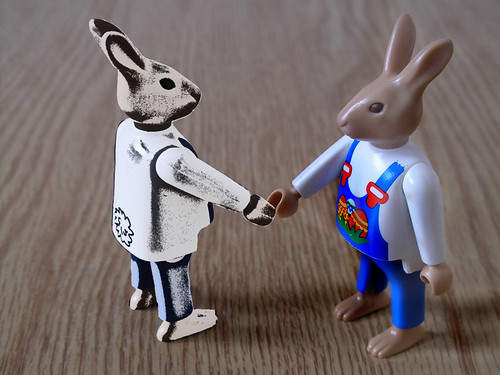
    A copy is just a copy by kioan

    Taylor Swift recently received a lot of media attention for pulling her music off Spotify. I am not going to comment specifically on Swift’s decision for pulling the music but I would like to take a look at the following quote from Swift in an interview with Yahoo:

    I felt like I was saying to my fans, ‘If you create music someday, if you create a painting someday, someone can just walk into a museum, take it off the wall, rip off a corner off it, and it’s theirs now and they don’t have to pay for it.’ Taylor Swift

    Comparing physical art with digital art in this way is like comparing apples and skyscrapers. Does Swift really think that vandalizing and stealing part of a painting is the same as streaming a song? I hope not. The painting is a physical object and it is unique. The bits and bytes of a song are not unique. If I rip off the corner of your painting, it is not the same painting anymore. If I stream your song on Spotify, the song is still the same. If your painting is stolen, you do not have it anymore. If I copy your song, we both have the same song.

    A digital copy is a perfect copy — identical to the original. Analogies like Swift’s convey the wrong message about streaming and it sounds very similar to the old music industry slogan that “copying is stealing”. But let’s be perfectly clear about something: Copying is not stealing.

    Copying, pirating, streaming or whatever might or might not be a bad thing but we can and should not use physical analogies to describe the act of copying or streaming. It is very disappointing that Taylor Swift is perpetuating the traditional discourse of the industry when talking about digital art.

  • Photo Amaze

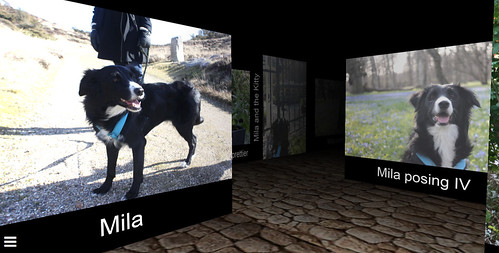
    Screenshot of Photo Amaze app

    About a month ago, I attended the wedding of a childhood friend. Since I have had some extra free time lately, I came up with an idea of combining my interest in 3D with an app that could be used for the wedding. The result was Photo Maze, a 3D maze where the guests at the wedding could upload a photo from their phones and it would appear immediately in the maze, giving the bride and groom a kind of interactive photo album from their party.

    I felt the urge to develop this idea a bit further and now, it has be re-named to Photo Amaze — a pun on maze and amaze. It is available for everyone, and I hope you will try it out!

  • Historical design decisions and consequences

    Douglas Crockford discovered JSON and he also wrote a reference implementation for JSON in Java. One of the great stories I heard him share was on Hanselminutes episode 396: He was contacted by some developers that were getting syntax errors while parsing JSON using his reference implementation. It turned out that they were transferring JSON documents more than 2GB in size but the Java implementation was using a 32 bit integer to keep track if the number of characters in the JSON document. The maximum value of a 32 bit int in Java is:

    2^31-1 = 2.147.483.647 ~ 2 billion = 2G

    So because 2GB of data has a higher number of characters than can be stored in a 32 bit integer, that was obviously a problem. As Douglas Crockford says in the podcast, he had no idea that anyone would ever use JSON to store so much data yet it happened anyway and all of a sudden it was actually a bug.

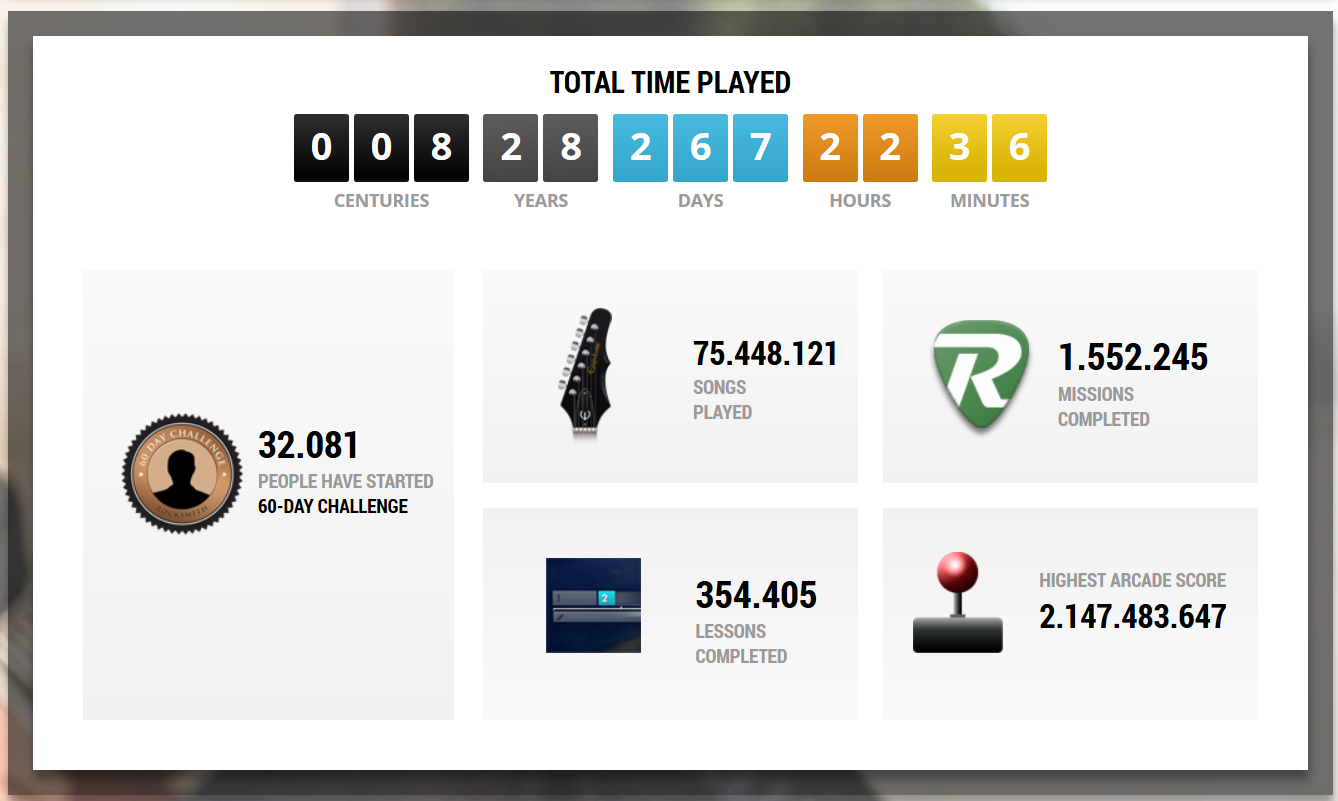
    Historical design decisions and their consequences for modern day computing are very interesting and I recommend listening to the entire Hanselminutes show through the link above. I just wanted to share a recent example of the same kind of problem. Here is a screenshot from the landing page for Rocksmith (a guitar hero kind of game but with a real guitar):

    Rocksmith splash screen

    The interesting part of this screenshot is the highest arcade score. It is exactly the maximum value of an int (2.147.483.647). I do not think it is a coincidence. I think the Rocksmith developers simply did not think that anyone would ever get more than 2 billion points in the arcade game and it was probably a fair guess. I could be wrong of course, but it is still a good reminder that even small decisions like choosing a datatype to keep track of a score has consequences for the software we produce.

  • The Notepad trick

    There is a good reason Notepad has survived through all iterations of Windows. It is the best tool for clearing formatting!

    For example, copying text from a webpage to Word will often keep the formatting (color, size and so on) but copying it to Notepad first and then re-copying it to the other editor clears the formatting completely.

    I call this “The Notepad Trick” and I use it all the time so I thought it would be a good idea to pay homage to good ol’ Notepad.

    Here is a direct copy between two Google Docs documents:

    Google Docs copy text

    Notice how the headline is the same size. Sometimes one might not want this. Here is the same copy with Notepad as a middle step:

    Copy with Notepad as middle step

    The formatting is all cleared, yay!

    By the way, the trick is also described elsewhere.